Now Live AI Infrastructure Audit — Free 30-min review for SaaS & AI teams
Book Discovery Call
Home / Services / Cloud Infrastructure
Cloud Infrastructure · 01 of 04

Production AWS in 4 weeks,
not 4 quarters.

Multi-account, multi-region cloud environments your team actually owns. Terraform-managed, Kubernetes done right, security baked in from line one. Senior engineers ship it. Your team runs it.

From $18k fixed-scope 4–8 week delivery 100% CIS-compliant No vendor lock-in
AWS Organization · multi-account
CIS 100%
cloudico-org · Management
root
Security · Audit logs · Log archive
ou-sec
Production
ou-prod
app-prod · us-east-1 / eu-west-1
live
Development · Staging
ou-dev
12
Accounts
3
Regions
100%
As IaC
99.97%
Uptime
Deployed for YC-backed startups, Series A–C SaaS, and AI teams worldwide
How Cloud Setups Break

AWS rarely breaks all at once.
It drifts.

One AWS account. Fast deployments. Console clicks. Then engineers join, environments multiply, and ownership blurs. Here’s the timeline most teams don’t realize they’re on:

Day 1 · Month 0–3

The honeymoon phase

One AWS account. Fast deployments. Console clicks feel harmless because the whole environment fits in one person’s head. Production, staging, and dev share resources — and nobody minds.

Month 6 · Year 1

The silent sprawl

More engineers join. New environments appear. Ownership blurs. IAM exceptions accumulate, spend creeps upward, and production starts depending on tribal knowledge. The bill climbs faster than usage.

Year 1+ · The wall

The complexity wall

Security findings pile up. Audits stall. Velocity collapses. Teams slow down because nobody trusts the platform anymore. You stop building cleanly and start patching around a foundation that was never properly laid.

Server infrastructure
“By Year 2, half my engineering team was firefighting infra instead of building product. That’s the real cost of letting drift run.
VP Engineering · 60-engineer Series B SaaS

This wall is preventable.

The right foundation, set up correctly, prevents 90% of this drift. The rest gets caught by guardrails before it becomes a year-long cleanup project.

See how we build it


What Goes Wrong

Five problems that
don’t fix themselves.

These are the specific failure modes we see most. Each one quietly compounds until it becomes the only thing your engineers can work on.

01 · The compounding problem

One mistake takes down everything.

Without account separation, a bug in dev can break production. A security breach in one workload affects every other workload. A misconfigured IAM policy exposes the whole org. The blast radius is the entire company — and most teams don’t realize this until the first incident.

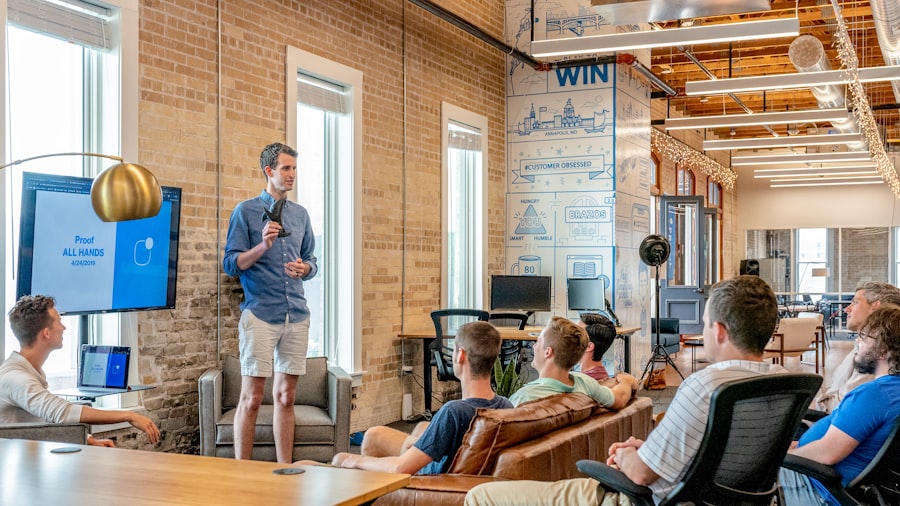
Engineering team handling incident
Incident · 14h recovery
“A junior engineer ran a Terraform destroy in what they thought was staging. It was production. Recovery took 14 hours. That’s when we called Cloudico.”
02

You can’t see where the money goes.

All your costs are mixed together. You can’t track spend by team, project, or environment. The CFO asks “why is the bill up 40%” and the answer is “we don’t know yet.” Finding actual cost-saving opportunities takes weeks of forensic work, every time.

03

You’ll hit AWS service limits.

Single accounts run into hard service quotas. What worked at 10 resources breaks at 100. Suddenly you can’t spin up another RDS instance, or your Lambda concurrency caps out, or your S3 buckets max out. The fix is multi-account — but only if you set it up right.

04

Compliance becomes a nightmare.

Different workloads need different security policies, but you’re stuck with one-size-fits-all. SOC 2 and HIPAA auditors ask for evidence you don’t have. You scramble for 3 months building paper trails retroactively. Every audit cycle gets harder, never easier.

05

IAM permissions are a tangled web.

Managing who can access what becomes incredibly complex. You either give too much access (risky) or too little (blocking your team’s work). New engineers wait days for the right permissions. Offboarding takes weeks. The principle of least privilege is theoretical, never enforced.

There Are Three Paths

Build it yourself, use Control Tower, or get it right.

Most teams reach this fork. Here’s the honest comparison — not a sales chart.

DIY in-house
AWS Control Tower
Time to production
3–6 months
1–2 months + setup
100% Infrastructure as Code
Depends on team
ClickOps required
CIS / SOC 2 compliance day 1
Build yourself
Partial baselines
Senior engineer ownership
Internal hire(s)
No engineer included
Knowledge transfer to your team
Tribal & partial
Docs only
Vendor lock-in
None
AWS-only patterns
Cost
$60k+ in eng time
$500/mo + hidden cost
Risk of misconfiguration
High — first time
Medium
What We Build

Six capability blocks.
All shipped.

Every engagement covers the same six areas. The depth varies based on your scope, but nothing on this list is optional.

The full stack

Everything you need to actually run production.

Six capability areas. Same baseline on every engagement. AWS Organizations at the top, Terraform modules at the bottom, GitHub Actions and observability wired through the middle. You’ll get a complete, working production environment your team can ship into from day one.

AWS OrganizationsTerraformEKSGitHub ActionsKarpenterDatadog
Production cloud infrastructure
live · production

Multi-account architecture

AWS Organizations with isolated production, staging, dev, and security audit accounts. Each one limited in blast radius, fully separated from the others, with cross-account access via role assumption only.

AWS OrganizationsSCPsCross-account IAM

Everything as Terraform

100% Infrastructure as Code. Modular Terraform with reusable modules per environment. Version-controlled in your repo. PR-reviewed. Tested in CI before plan/apply. No console clicks except for the bootstrap.

TerraformModulesGitOps

Kubernetes done right

EKS / GKE / AKS clusters with autoscaling configured for real traffic patterns. Cluster-autoscaler or Karpenter, proper requests/limits, network policies, secrets management, and ingress controllers tuned for production.

EKS / GKE / AKSKarpenterNetwork Policies

CI/CD with safe rollback

GitHub Actions or GitLab CI pipelines that build immutable artifacts, promote the same image across dev → staging → prod, and support one-click rollback. Branch protection, required reviews, and OIDC auth — no long-lived secrets anywhere.

GitHub ActionsOIDCArgoCD / Flux

Security baked in

100% CIS-benchmark compliant from day one. GuardDuty, CloudTrail, Config, and Security Hub configured across all accounts. Encrypted by default everywhere. Least-privilege IAM. SOC 2 / HIPAA evidence trails set up so audits stop being painful.

CIS 100%GuardDutySecurity Hub

Cost visibility & guardrails

Costs allocated by team, service, environment, and customer (where applicable). Budget alerts and anomaly detection on every account. Reserved Instances and Savings Plans where they pay back — no over-commitment. Drift detection so usage never silently runs away from you.

Cost ExplorerAnomaly DetectionRIs / Savings Plans
Every Feature, Listed

No fine print. This is what ships.

Every Cloud Infrastructure engagement ships with the same baseline. Larger scopes add to this list — nothing on it is ever removed.

Code editor showing Terraform infrastructure as code
39 features · one engagement

Every feature lives in your repo, not ours.

Every checkbox below is a Terraform module, a GitHub Action, or a security policy we hand you on day one. No black boxes, no proprietary wrappers, no vendor lock-in.

39
features shipped
100%
as IaC
0
proprietary tools
Security & Compliance
12 features · CIS-aligned
  • Centralized GuardDuty across every account, delegated admin model
  • Organization-wide CloudTrail with encrypted log archive
  • AWS Config recording continuous compliance state
  • Security Hub with CIS & AWS FSBP standards enabled
  • S3 public-access block enforced at account level
  • EBS encryption-by-default on every region
  • IAM password policy enforced via SCP
  • VPC default-security-group hardening
  • KMS key management with audit logging
  • Root user MFA enforced & root keys removed
  • Secrets Manager / Parameter Store for credentials
  • Audit log retention with lifecycle policies
IaC & Deployment
10 features · Terraform-native
  • Modular Terraform with reusable per-env modules
  • Remote state with S3 + DynamoDB locking, encrypted at rest
  • Workspace-per-environment isolation strategy
  • GitHub Actions CI/CD with OIDC (no long-lived AWS keys)
  • Terraform plan + apply gated by required PR review
  • Pre-commit hooks for tfsec / Checkov / formatting
  • Drift detection via scheduled plan runs
  • Container builds with SBOM & vulnerability scanning
  • Image promotion across environments (same artifact)
  • One-click rollback path documented per service
Networking & Kubernetes
8 features · production-tuned
  • Multi-AZ VPCs with private + public subnets
  • Transit Gateway for inter-account / region connectivity
  • VPC endpoints for AWS services (cost & latency wins)
  • EKS cluster with managed node groups + Karpenter
  • Network policies via Calico or Cilium
  • Cert-manager & external-DNS pre-configured
  • Ingress (ALB / NGINX) with WAF rules
  • Pod security standards enforced cluster-wide
Cost & Operations
9 features · FinOps-ready
  • Cost allocation tags enforced at account-creation
  • Per-team, per-env, per-customer cost breakdowns
  • AWS Budgets with email/Slack alerts
  • Cost anomaly detection on every account
  • Reserved Instance & Savings Plan recommendations
  • S3 lifecycle policies (Standard → IA → Glacier)
  • Centralized logging with retention & alerting
  • Backup & restore drills documented and tested
  • Runbook library for top 10 incident scenarios
The Architecture

What it looks like in your AWS Organization.

A simplified view of the multi-account structure we deploy. The exact OUs, regions, and accounts get tuned to your stage — but the core shape is consistent across every engagement.

cloudico-org · reference architecture
CIS 100% Multi-region 100% IaC
Management OU
Production OU
Dev / Staging OU
CI/CD
GitHub Actions · OIDC
Observability
Prometheus · Grafana
Secrets
AWS Secrets Manager
FinOps
Budgets · Anomaly
What You Walk Away With

Numbers your CFO and CTO both care about.

Averaged across our last 14 Cloud Infrastructure engagements. Your numbers will vary — but the shape is consistent.

0%
CIS Foundation Benchmark pass rate
From day one
0 wk
Median kickoff to production
Across 14 engagements
0%
Uptime achieved over 12 months
Post-handover average
0%
Reduction in monthly cloud spend
vs prior ClickOps setup
How It Runs

Three steps. Clear deliverables at each one.

The full 6-phase process from the Services overview, condensed into the 3 visible milestones you’ll experience. No mystery, no scope creep.

Kickoff working session
Kickoff
1
Week 0 · ≤ 2 hours

Kickoff & requirements

A 90-minute working session with your team. We learn your stack, compliance posture, growth plans, and which AWS accounts already exist. We confirm scope and pricing in writing before any paid work begins.

You’ll have
  • Written requirements doc
  • Confirmed scope & fixed price
  • Mutual NDA in place
  • AWS Organization access mapped
Engineer at workstation deploying infrastructure
Build
2
Weeks 1–6 · build

Deploy & configure

We deploy the multi-account foundation, migrate existing workloads without downtime, and harden security alongside your team. Weekly written demos and a Slack channel for real-time questions. Your dev team keeps shipping the whole time.

You’ll have
  • Live multi-account org
  • Production workloads migrated
  • Terraform code in your repo
  • CI/CD pipelines running
Knowledge transfer session with engineering team
Handover
3
Week 7–8 · handover

Handover & knowledge transfer

Live walkthrough of every account, control plane, and runbook. We pair-program with your engineers until they can ship changes confidently on their own. Then 30 days of post-handover Slack access — no extra cost — while you settle in.

You’ll have
  • Complete runbook library
  • Recorded walkthroughs
  • 30-day Slack support
  • Compliance evidence pack
After We Ship

Two paths forward. You pick.

Once the foundation is live, you choose how much of us you want around. Both paths give you 100% code ownership — no lock-in either way.

Engineering team self-managing infrastructure
Your team owns it

Self-managed handover

Take full ownership from day one. Your team runs everything. We’re done after the 30-day post-handover window unless you call us back.

  • Complete Terraform codebase in your GitHub
  • Full runbook library + recorded walkthroughs
  • 30 days of free Slack-channel support
  • No ongoing fees, no vendor lock-in
  • Re-engage anytime on a project basis
Investment after delivery
$0/month · you own it
Start with handover
Featured Engagement

One client. From console-clicks to multi-account in 5 weeks.

AWS production infrastructure
Cloud Infrastructure AWS · Terraform · EKS 5 weeks delivered
From a single AWS account to a SOC 2-ready multi-account org
B2B SaaS · ~80 engineers · Series B

“We’d been on AWS for four years and never moved past one account. Cloudico migrated us to a proper multi-account org in five weeks. The first SOC 2 audit after that was the easiest one we’d ever done.”

Marcus Thompson
Marcus Thompson
CTO · B2B SaaS, Series B

The team had grown from 12 to 80 engineers on a single AWS account with hand-built CloudFormation. IAM had drifted, costs were unallocated, and the upcoming SOC 2 audit was a ticking clock. We migrated workloads into a 9-account org structure with zero downtime, ported infrastructure to Terraform, and set up the evidence trail their auditor needed. Their team owns every line of code we wrote.

Stack & tools shipped
AWS OrganizationsTerraformEKSKarpenterGitHub ActionsOIDCSecurity HubGuardDutyCloudTrailDatadog
5 weeks
Kickoff to production multi-account org
100%
CIS Foundation Benchmark on first audit
−32%
AWS spend reduction with no perf impact
0
Customer-impacting incidents during migration
Before The Call

The seven questions CTOs ask us most.

Direct answers to the questions that come up before every Cloud Infrastructure discovery call. Different from the FAQ on the services overview — these are specific to this engagement.

Ask us directly
Will this disrupt our existing AWS workloads?
No. We attach the new multi-account structure to your existing AWS Organization (or create one if you don’t have it) and migrate accounts into the new structure without downtime. Workloads keep running. Engineers keep shipping. There’s no freeze window, no maintenance pause, no production cutover — guardrails get rolled out gradually around your live services.
How is this different from AWS Control Tower?
Control Tower is a great starting point but still requires significant console work to reach the security and automation level you actually need. Our setup ships 100% as Terraform (no ClickOps), enforces CIS-level compliance from day one, and includes a named senior engineer who builds it with your team. Same end-state, but you get there in 6 weeks instead of 6 months, and you own every line of code.
Do we need to pause feature development while you work?
No. Your engineers keep shipping their normal roadmap the entire time. The new infrastructure is built in parallel and your existing workloads migrate into it gradually. Most teams describe the experience as “surprisingly quiet” — there’s a Slack channel where we report progress weekly, but your dev team’s day-to-day doesn’t change.
What if we need changes after delivery?
The entire Terraform codebase lives in your GitHub repository. Your team can modify OU structures, Service Control Policies, IAM roles, and account configurations through normal pull requests. The architecture scales to dozens of accounts. If you want our help, the Embedded SRE retainer covers exactly this kind of ongoing change work. Otherwise, any AWS-fluent engineer can extend it.
What if something breaks after handover?
30 days of post-handover Slack support is included by default — questions, edge cases, integration help. After that, you’re on the retainer or you’re not. Either way, the Landing Zone uses standard AWS services and standard Terraform patterns. There’s nothing proprietary in our build that could lock you up. Any AWS engineer familiar with Terraform can troubleshoot and resolve issues.
Do you do GCP and Azure, or just AWS?
All three. AWS is our deepest expertise — about 70% of engagements. GCP comes second (especially for AI/ML workloads using Vertex AI or GKE). Azure third, mostly for teams already tied to Microsoft’s ecosystem. Whichever you’re on, the engineering patterns (multi-project / multi-subscription, IaC, GitOps, least-privilege identity) translate cleanly across clouds.
What does pricing actually look like?
Cloud Infrastructure engagements start at $18k fixed-scope, typical range $24–48k depending on number of accounts, regions, existing-workload complexity, and compliance scope (SOC 2 / HIPAA add to the scope). Pricing is confirmed in writing after the discovery call — never variable, never hourly. If we miss the timeline on our side, you don’t pay for the overrun. Optional embedded retainer from $4.5k/month after delivery, cancel anytime.
Ready when you are

Production-grade AWS in 4–8 weeks.

Book a 30-minute discovery call. Senior engineer on the call. We’ll map your stack, surface the right scope, and confirm pricing in writing before any paid work starts.

30-min consult Mutual NDA available Written scope & price No obligation